


Insights
More than just providing resources for STEM, we should be focused on creating a community of creative STEM learners. It isn’t enough or even best to buy a bunch of STEM learning kits and expect it to drive the learning without instilling the importance of being a creative tinkerer in your students.

We should be inspiring students to think of themselves as custodians of the community and the planet they are a part of. It’s not enough to encourage learning only in the classroom, but we need to push students to work towards solving the real-world challenges we face.
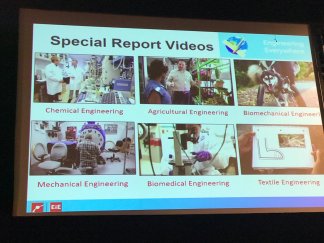
Key to STEM learning is connecting students to real-world practitioners. Students can begin to experience the awesomeness of engineering and design thinking in the classroom, but it is crucial that, in addition to directing them toward genuine challenges, we need to provide them first-hand examples of the people working in fields to solve those problems. And that becomes even more powerful if those are people in their community.
Help students create their own narratives. Story is powerful and powers everything in our lives. We don’t see our life as a series of events but as a story we tell ourselves about who we are. And we tell it to our students with every interaction and, in so doing, we tell them who we think they are. They listen. What story are we telling them? What story are we helping them narrate about themselves? Are we helping them become creators of something good?
Science investigation shouldn’t just be about the natural world when we live in an engineered world. We spend a lot of time on astronomy and biology in the early years which is great since I really love an Okapi and a nebula, but we should be exploring human designs during that time as well whether through code or building popsicle stick bridges.


Jokes about math being hard get a good laugh, but should they? One of the keynote presenters made an off the cuff comment about how they, as a literacy teacher, walked into a math class and just became overwhelmed with the symbols and numbers. People chuckled, because, you know, math is hard. But is that the right attitude to have? In a world where it’s become more acceptable for some kids to pretend to be ignorant since ‘not knowing’ is cooler than ‘knowing’ shouldn’t we fight against that attitude? Would we find a joke that ended with “but I can’t read because words are hard” as funny? If not why should math and science illiteracy be the butt of a joke?


Real design and reflection don’t need to be high tech. In fact, sometimes it’s more powerful and accessible when it’s not. It can involve common crafting materials like pipe cleaners, tape, and tinfoil. The materials are of less consequence than the design and the process. After reiterating and a quality design is completed, then a more permanent model can be created, but only after students understand the methodology which is easier with cheap, reusable tools.
Learning in the abstract is meaningless. Powerful learning comes in the application of our knowledge. Just knowing a fact serves no purpose. The distance the sun is of little consequence unless you’re designing for light interaction or space travel. Learning gets its purpose when it becomes hands-on. Otherwise, it is forgettable.


It is crucial in STEM instruction to embrace different approaches and multiple solutions to a problem. Rarely is there a single simple right answer to real-world challenges, so why do we require that in the classroom? If we want students to work to come up with designs to help clean the Pacific Garbage Patch, why would we accept only one type? Maybe someone creates a vacuum and another a filter system while a third has a robotic barge with arms. If we automatically disqualify certain ideas like those of an ingenious and dedicated 19-year-old designer then we will never find anything more than what we expected.


Failure and reiteration are crucial to learning. Failure and reiteration or debugging are built into the design and coding processes, so it is unrealistic to expect first-try-success. In fact, it can be detrimental because it discourages innovative ideas.
Encourage risk-taking in students and teachers. Like I just said, if you’re not taking risks you will never find unexpected success. If, as a teacher, you are not regularly nervous about or stumbling with what you’re doing in the classroom then you are not exploring or growing. It’s easy to stagnate and get in a rut especially if you fear any error, but it maintaining everything as is you have already made an error because the world around you continues to evolve and change while you don’t.

